Tree Removal Metairie for Trees Crowding Fences and Structures
In Metairie, trees do more than shape the look of a property. They throw shade over patios in punishing summer heat, soften street noise, and make a house feel established instead of freshly dropped onto a lot. But the same live oak, water oak, pine, or fast-growing ornamental that looked perfect ten years ago can become a real problem when the trunk starts leaning toward a fence line or the canopy pushes hard against a roof, shed, garage, or neighboring structure.
That is where judgment matters. Not every tree pressed close to a building needs to come down, and not every tree can safely stay. The challenge is figuring out when pruning and root management are enough, and when tree removal in Metairie becomes the sounder choice for the property, the structure, and the people using the space every day.
Homeowners often wait longer than they should because the signs develop slowly. A fence bows a little more each season. A branch rubs the roof only in strong wind. A concrete pad near the base starts to lift by half an inch, then an inch. None of those things feels urgent on its own. Together, they tell a story of a tree outgrowing its setting.
Why crowding turns into structural risk
A tree does not have to fall to cause expensive damage. In fact, most tree-related property problems I have seen around fences and outbuildings happen long before a failure event. The issue is usually repeated contact, pressure, or underground displacement.
Take a mature tree planted too close to a wood privacy fence. At first, the concern is minor. Leaves collect. Branch tips lean over the top rail. Then the trunk diameter increases year after year. Trees do not politely stop expanding because a fence post is in the way. If the trunk or root flare reaches the line, it can shove panels, break post alignment, and create a permanent lean. A fence contractor may replace sections once or twice, but if the tree remains, the new work often fails again.
Structures are even less forgiving. A limb scraping shingles can strip granules and shorten roof life. Limbs growing into soffits create pathways for moisture and pests. Dense canopies hanging over low roofs keep surfaces damp after rain, which encourages mold, algae, and wood deterioration. If a tree is close enough that large scaffold branches arch directly over a house or detached garage, the margin for error during storms narrows considerably.
In southeast Louisiana, that margin matters. Metairie properties regularly deal with heavy rain, saturated soil, summer thunderstorms, and occasional tropical weather. Trees that seem stable through most of the year can become unpredictable when the ground softens. Saturated roots lose holding strength. Wind loads rise quickly on broad canopies. A tree already compromised by crowding, poor form, or hidden decay becomes much more concerning under those conditions.
Fences usually show the problem first
Fences are often the earliest visible indicator because they sit right at the conflict point between a growing tree and a property boundary. They tell the truth in a way the canopy sometimes does not.
A fence panel that once ran straight begins to step up or down. One gate no longer closes without lifting it. Posts near the tree line start leaning while posts farther away remain plumb. Homeowners sometimes assume this is ordinary settling, and sometimes it is. But when the distortion clearly radiates out from a tree base or from thick surface roots, there is usually more going on than age alone.
I have seen situations where a homeowner spent several thousand dollars replacing a side-yard fence, only to discover within two years that the same section was moving again because the root issue had never been addressed. Cutting one visible root to protect the fence is rarely a simple fix. That can destabilize the tree, especially if the root is substantial and close to the trunk. It may also trigger decline that takes months or years to show up, which can leave the owner with both a failing fence and a hazardous tree.
This is one reason experienced arborists and removal crews rarely treat fence conflicts as just a carpentry problem. The fence is the symptom. The tree’s size, species, age, root spread, and structural condition determine whether preservation is realistic.
When pruning is enough, and when it is not
Good pruning solves many space conflicts. A well-placed reduction cut can pull branch weight away from a roof. Crown cleaning can remove deadwood over a shed or carport. Selective thinning can improve wind movement through a dense canopy. If the trunk is sound and the root system is not disrupting hardscape or fence foundations, pruning may buy many more years of safe coexistence.
The trouble starts when owners expect pruning to solve a problem rooted in trunk position or root pressure. If a tree is physically too close to a building, no amount of branch trimming changes that fact. If a large trunk has grown into a fence line, cutting the canopy back does not reverse mechanical pressure on posts and rails. If roots are lifting slab sections beside a detached structure, pruning the crown may reduce some stress over time, but it will not make the grade level again.
One practical way to think about it is this: pruning works best when the conflict is above ground and outward. Removal enters the conversation when the conflict is inward and foundational.
There is also the issue of repeated maintenance. Some trees can be kept off a roof only with aggressive pruning every couple of years. That may be acceptable for a valuable specimen tree removal metairie in a spacious yard. In a tight Metairie lot, where access is limited and structures sit close together, repeated intervention can become more expensive than many owners realize. It can also leave the tree misshapen, stressed, or more vulnerable to decay if cuts are overdone or poorly placed.
Trees that commonly outgrow their location
Not every species behaves the same near fences and structures. Some spread wide and low. Others race upward and then shed limbs as they mature. Some tolerate urban stress well. Others decline quickly if roots are disturbed or compacted.
Fast-growing trees are frequent culprits because they deliver quick shade and privacy, which is appealing when a home is new or a yard feels exposed. The trade-off is often weaker branch attachment, shorter life span, or more aggressive root behavior. Large oaks present a different challenge. They may be durable and beautiful, but they need room. Planting a tree that can eventually carry a broad crown ten feet from a house almost always creates a hard choice later.
Crepe myrtles, magnolias, and smaller ornamentals usually create different kinds of conflicts. They may not threaten a roof structure in the same way a large oak does, but they can still overcrowd fences, block drainage, scrape siding, and create visibility issues around walkways and gates. Smaller trees are not automatically harmless. A multi-stem ornamental planted right on a fence line can become a removal headache simply because there is no clean way to dismantle it without protecting surrounding property.
Species matters, but form matters too. A tree with included bark, co-dominant stems, old storm damage, or a heavy lean toward a structure deserves closer attention than a similar tree with balanced architecture and good branch spacing. That kind of nuance is why broad rules only go so far.
What a careful removal assessment should cover
When a homeowner calls about tree removal Metairie services for a tree crowding a fence or building, the first useful conversation is rarely about price alone. It starts with what exactly is happening on site.
A proper assessment should look at the tree’s health, structural defects, distance from nearby structures, access constraints, and the target area below. “Target area” is a practical term for what gets hit if something goes wrong, rooflines, parked vehicles, utility lines, neighboring yards, AC units, patio covers, or the fence itself.
Access in Metairie can be tricky. Many lots have narrow side yards, overhead service lines, detached garages tucked behind homes, and limited room for equipment. A straightforward backyard tree can turn complex when there is only a slim corridor between houses or when dismantling must happen over a pool enclosure or masonry wall. In those cases, removal usually involves sectional rigging. Limbs and trunk sections are cut in controlled pieces and lowered with ropes instead of dropped freely. It takes longer, but it protects the property.
A strong assessment also considers the aftermath. Once the tree is gone, what happens to the stump? Will roots continue to affect the fence line? Does the owner plan to rebuild a structure in the same spot? If the goal is to install a new fence immediately, stump placement and root grinding depth matter more than many people realize.
Signs removal is often the wiser option
There is no universal rule, but certain conditions push the recommendation toward removal rather than repeated pruning or partial fixes.
- The trunk is already contacting or engulfing the fence line.
- Major limbs extend directly over a roof or structure with visible defects, decay, or past failure.
- Surface roots are displacing fence posts, paving, or slab edges near the building.
- The tree shows a pronounced lean toward a target after root disturbance or storm movement.
- Access for future maintenance is so limited that safe pruning will be difficult and costly on a regular cycle.
These situations do not guarantee removal in every case, but they do change the risk calculation. Once structural damage has begun, the cost of waiting tends to rise.
The hidden cost of postponing the decision
Homeowners often compare removal bids against the immediate cost of doing nothing, which can make removal feel easy to put off. The real comparison should be broader.
A tree that crowds a structure can generate a steady stream of secondary expenses. Fence repairs. Roof patching. Gutter replacement. Mold remediation under shaded eaves. Regrading where roots alter drainage. Pest control after limbs give rodents access to soffits or attic lines. None of those bills looks like “tree damage” in a simple spreadsheet, but together they add up.
There is also a liability angle. If a tree with obvious defects fails onto a neighbor’s fence or parked car after months of visible decline, the dispute gets messier. Even when insurance helps, claims are disruptive. Deductibles still exist. Premiums can tree removal metairie change. Scheduling repairs after a regional storm event can take far longer than owners expect.
I remember one property where the owner hesitated because the tree itself looked healthy from the street. Up close, one codominant stem had a deep seam running down toward the main union, and the whole canopy hung over a detached workshop. The workshop roof had already been patched twice from limb strikes. By the time removal happened, the structure needed new decking along one edge, not because of one dramatic collapse, but because years of rubbing and moisture had done their work. The tree removal bill was not small, yet it was still less than the compound cost of waiting.
How removal is handled around tight structures
People often picture tree removal as a loud, fast operation with large pieces crashing into an open yard. Around fences and structures, professional removal usually looks nothing like that.
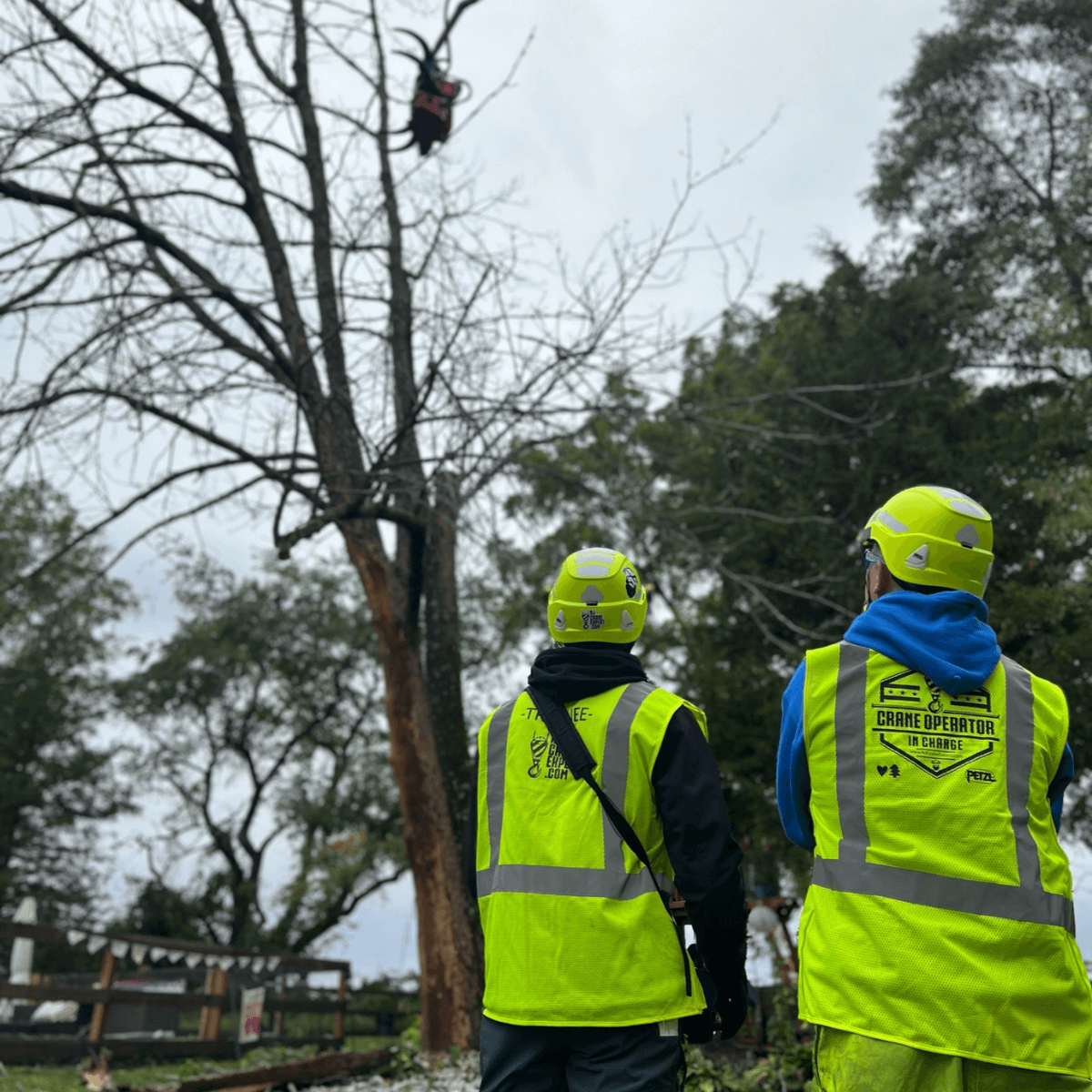
The work is more controlled and more methodical. The crew establishes drop zones if any exist at all. Climbing lines or lift access are set carefully to avoid loading weak limbs. Branches are cut in smaller sections so they can be guided down without scraping roofs, smashing fence caps, or swinging into neighboring property. If there are utility lines nearby, that affects both the sequence and the safety plan.
In close quarters, clean communication matters as much as saw skill. One person cutting and one person managing rigging must stay coordinated. Ground workers need clear landing areas and a plan for moving brush without blocking gates or damaging landscape beds. When the trunk comes down in rounds, weight and swing are calculated, not guessed.
That may sound obvious, but it explains why bids can vary. A tree in an open front yard and a tree pinned between a fence, a shed, and a roofline are not the same job, even if the trunks are similar in diameter. Time, labor, insurance exposure, and equipment needs are different.
Stump grinding and root realities
After the tree is removed, many owners assume the problem is fully gone. Sometimes it is. Sometimes the stump and larger roots still affect what comes next.
If a fence replacement is planned along the same line, stump grinding becomes part of site preparation, not just an optional cleanup item. Leaving a large stump beside new posts can compromise alignment and leave an awkward gap. Deep roots may also interfere with post placement. Grinding removes the stump below grade, but it does not erase the entire root system. Some roots remain and decay over time.
That decay can have consequences. In most cases it is manageable, but if you are pouring concrete, setting masonry elements, or rebuilding near the old root plate, it is worth discussing with the contractor. Voids from decomposing roots can affect grade stability, especially in already wet soils.
For owners hoping the remaining roots will stop pushing immediately, the timeline can be uneven. Active pressure usually ends once the tree is removed, but existing displacement does not magically reverse. A fence that has been lifted or skewed still needs repair. Slab edges that have cracked remain cracked. Removal prevents worsening damage, but it cannot undo everything the tree already changed.
Choosing replacement plantings more wisely
Removing a tree near a fence or structure often leaves an emotional gap as much as a visual one. People miss the shade and privacy right away. That is understandable, and it is why rushed replanting sometimes repeats the original mistake.
The best replacement strategy starts with mature size, not nursery size. A five-gallon tree looks harmless. The question is what it wants to become in fifteen or twenty years. That answer should govern placement. If the goal is screening along a fence, a small tree or large shrub with predictable growth may serve the site much better than another broad-canopied species.
This is also a good time to think in layers. A single oversized tree planted too close to a structure is usually a compensation for wanting fast results. A better long-term approach might use a medium-height specimen placed farther out, with understory planting closer to the fence. That creates depth without setting up another conflict.
Local site conditions matter too. Drainage patterns, overhead lines, reflected heat from pavement, and the prevailing wind exposure all shape what will succeed. A replacement tree should fit the location, not force the location to accommodate it later.
Questions worth asking before hiring a tree removal crew
Hiring the right company matters even more when structures and fences are involved, because the cost of mistakes is immediate and visible. The cheapest price can become the most expensive choice if the crew lacks the experience or insurance to handle confined removals properly.
A few questions usually reveal a lot:
- How will the tree be dismantled given the nearby fence and structures?
- Is the company insured for this type of removal work?
- Will the quote include haul-off, stump grinding, and site protection details?
- What access is needed through gates, driveways, or neighboring space?
- Are there conditions that could change the final scope once work begins?
You do not need a long lecture from a contractor. You need direct, specific answers. If the explanation feels vague, especially around rigging, property protection, or cleanup, that is a warning sign.
Why timing matters in Metairie
There is rarely a perfect season for all tree work, but timing still affects logistics and risk. Wet ground can limit equipment access and increase lawn disturbance. Peak storm season tends to expose problems that were easier to manage earlier. Once a tree is obviously failing or has shifted toward a structure, waiting for a more convenient month may not be prudent.
At the same time, emergency decision-making often produces rushed hiring and higher stress. If a tree is crowding a fence and overhanging a roof now, but has not yet failed, that is usually the best window to evaluate options calmly. Planned removal is almost always easier on the property than emergency removal after partial collapse.
There is also a practical scheduling reality. Reputable companies with strong crews are often busy after storms and during peak maintenance periods. Waiting until a problem becomes urgent can mean fewer choices and longer delays.
A measured decision protects more than the landscape
A mature tree can be an asset, and good arborists know that removal should not be a reflex. But preserving the wrong tree in the wrong location is not stewardship. It is often just delayed expense wrapped in sentiment.
When a tree begins crowding fences and structures in a dense residential setting like Metairie, the right response depends on the specifics, species, structure, root behavior, access, targets, and the owner’s plans for the property. Some cases need careful pruning and monitoring. Others have already crossed the line where tree removal Metairie homeowners are considering is not drastic at all, it is the responsible next step.
The best outcomes usually come from early recognition. Notice the fence that no longer runs straight. Pay attention to branches touching roofing, gutters, or siding. Watch for roots lifting grade near posts and slab edges. Those small warnings tend to arrive long before the bigger bill.
A tree does not have to be dead to be a problem, and it does not have to fall to cause damage. In many crowded yards, the smartest move is not waiting to see what happens. It is making a clear-eyed decision while there is still time to protect the structures around it.
A Perfect Cut Tree Service
4725 Shores Dr, Metairie, LA 70006
+1 504-732-0779
FAQ About tree removal metairie
What is the average cost of tree removal in my area?
There is no single price that fits every tree. Size, condition, access, nearby structures, equipment, debris hauling and stump work affect the estimate. Request a written, site-specific quote that identifies what is included.
Who will remove trees for free?
Free removal is not generally available for ordinary private-property tree work. Utilities or public agencies may handle trees within their responsibilities. Confirm eligibility directly and do not assume that an offer or assistance program covers your tree.
Can I just cut down a tree in my yard?
Check ownership, location and local requirements first. Jefferson Parish requires a permit for removal of qualifying vegetation in the public right-of-way, and additional protections may apply in designated areas. Ask the parish about your property and have a qualified tree professional assess the work.